The Design
Intelligence Review
Sign in Join free
The Agentic Design Stack
UX is the future of AI
1.2M+
People in the UXM Community
112+
Invisible Machines episodes
20+
Years publishing UX thinking
Season 7—Spring 2026  ·  11 episodes  ·  Through-line: the human architecture of institutional change
New Ideation · New this week

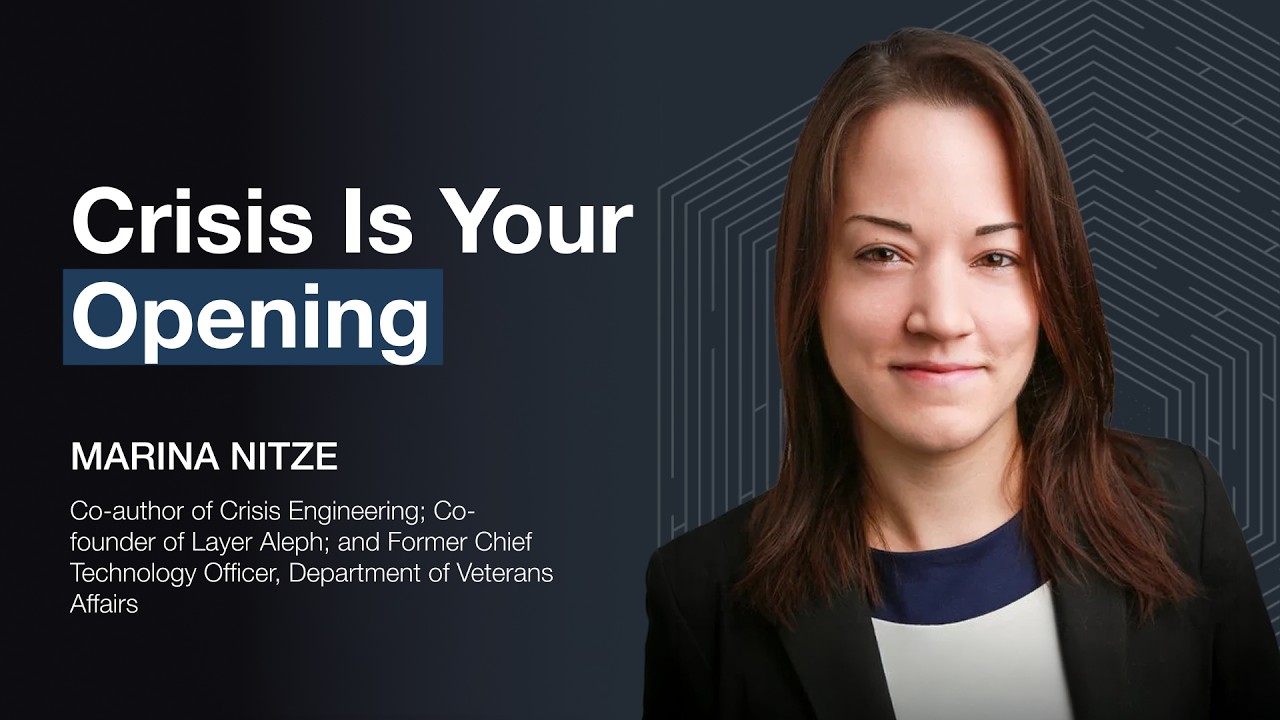
Crisis Is Your Opening

Most organizations tell themselves coherent stories about how their systems work—stories that hold until stress arrives. Marina Nitze treats crisis as a narrow window when sensemaking fails and new institutional stories become possible in hours, not years. As AI lets consumers probe those systems at scale, the gap between map and territory is becoming everyone’s problem.

Guest Marina Nitze
Episode S7 · Invisible Machines
Cluster Crisis Engineering · 3 pieces
Crisis Is Your Opening—Marina Nitze · Invisible Machines
Originating episode  ·  S7  ·  Marina Nitze
Marina Nitze  ·  Co-author, Crisis Engineering; Co-founder, Layer Aleph
Crisis Is Your Opening · Invisible Machines
From the episode breakdown  ·  Josh Tyson

Marina Nitze walked through California’s unemployment “call center”—a room of empty cubicles that executives had treated like a talisman. Nobody had followed the process end to end. That pattern shows up whenever organizations confuse map with territory, and AI is about to pressure-test every shortcut consumers find.

A useful crisis is not melodrama; it is a narrow window when sensemaking breaks and people will accept a new story that matches reality. Nitze’s five-indicator framework is deliberately operational: it tells you whether crisis engineering tools apply before you waste the window studying.

This cluster ties forward to Evan Ratliff’s outbound-AI argument and backward to canonical knowledge work: automate before you walk the workflow and you encode the carbon-copy form no one needed.

—Josh Tyson, Contributing Editor
Everything in this Ideation  ·  3 pieces
1
Episode  ·  Invisible Machines

Crisis Is Your Opening

Full episode on YouTube plus a searchable transcript—Marina Nitze on useful crises, sensemaking, the five indicators, novel action, rear-view metrics, walking the process end to end, and AI-shaped crises still to come.

Marina Nitze  ·  S7 Apr 2026 Free · video + transcript
2
UXM Article

The Map Is Not the System

On sensemaking, the stories organizations tell themselves, and why crisis is sometimes the only thing that reveals the truth—from the empty call center to carbon-copy DMV forms to outbound AI at consumer scale.

UX Magazine Staff 8 min read Free to read
3
Book excerpt · Crisis Engineering

BOOK EXCERPT: The Crisis Worth Using

The five crisis indicators from Nitze, Weaver, and Dickerson—fundamental surprise, sensemaking failure, core disruption, visibility, rigid time—and how to tell a real crisis from a culture of pretend emergencies.

Marina Nitze 7 min read Free to read
Season 7 ideations · Draft placeholders

Four Season 7 ideation clusters above are live with episode media and companion artifacts. Additional Season 7 placeholders below ship when each narrative locks.

Placeholder · review next
S7E4

AI Brings Cheap Prediction, Expensive Change

Avi Goldfarb · Economist, Co-author of Prediction Machines
Ideation tag (draft): TBD ("Ideation in progress" on podcast mockup)

[Placeholder] Wire canonical ideation name, hero headline, and artifact list once the Season 7 narrative title lands.

Listener hook (draft): Cheap prediction, expensive change—what shifts inside enterprises when machines guess better.

Placeholder · review next
S7E3

What ‘Cheap Prediction’ Means for Enterprise

Joshua Gans · Economist, Co-author of Prediction Machines
Ideation tag (draft): TBD ("Ideation in progress" on podcast mockup)

[Placeholder] Drop in episode artwork/video ID, hero media card, and practitioner connectors after production.

Listener hook (draft): Prediction economics translated for people who own roadmaps, budgets, and risk.

Placeholder · review next
S7E2

Scaled AI Requires Canonical Truth

Joe DosSantos · VP Data & Analytics, Workday
Ideation tag (draft): Canonical Truth

[Placeholder] Link out to standalone Canonical Truth ideation page when you split clusters; keep this row as summary or redirect card.

Listener hook (draft): Without canonical truth, enterprise AI scales confusion—not automation.

Placeholder · review next
S7E1 · Season premiere

Ben Goertzel on the Decentralization of AI

Ben Goertzel · CEO, SingularityNET
Ideation tag (draft): TBD ("Ideation in progress" on podcast mockup)

[Placeholder] Premiere episode cluster—decide whether ideation opens Season 7 landing narrative or stays episodic.

Listener hook (draft): AGI, decentralization, and the incentive geometry behind who controls capability.

🔒
Members exclusive

The synthesis is members-only.
The rest is free.

Watch the episode and read both companion pieces free. Members still unlock synthesis essays and threaded conversation across Ideations.

Join free → Learn about membership

The Conversation

3 responses  ·  curated for this cluster

Early commentary on crisis engineering, sensemaking failure, and what breaks first when AI-enabled consumers probe institutional seams.

JT
Josh Tyson
Contributing Editor, UX Magazine

The call-center-that-wasn’t story lands because it isn’t incompetence—it’s coherence without contact. That is the precondition for every outbound-AI shock coming next.

Apr 2026 · Editorial note echo
Add to the conversation
UXM members can post responses directly. Guests and contributing authors are always welcome—email editors@uxmag.com to have your response featured.
🔒
Members join the conversation
Responding to Ideations is a members-only activity. Every approved response is reviewed before it appears.