New Ideation
New this week · S7E19 · Ben Reason & Lavrans Løvlie
Ideation
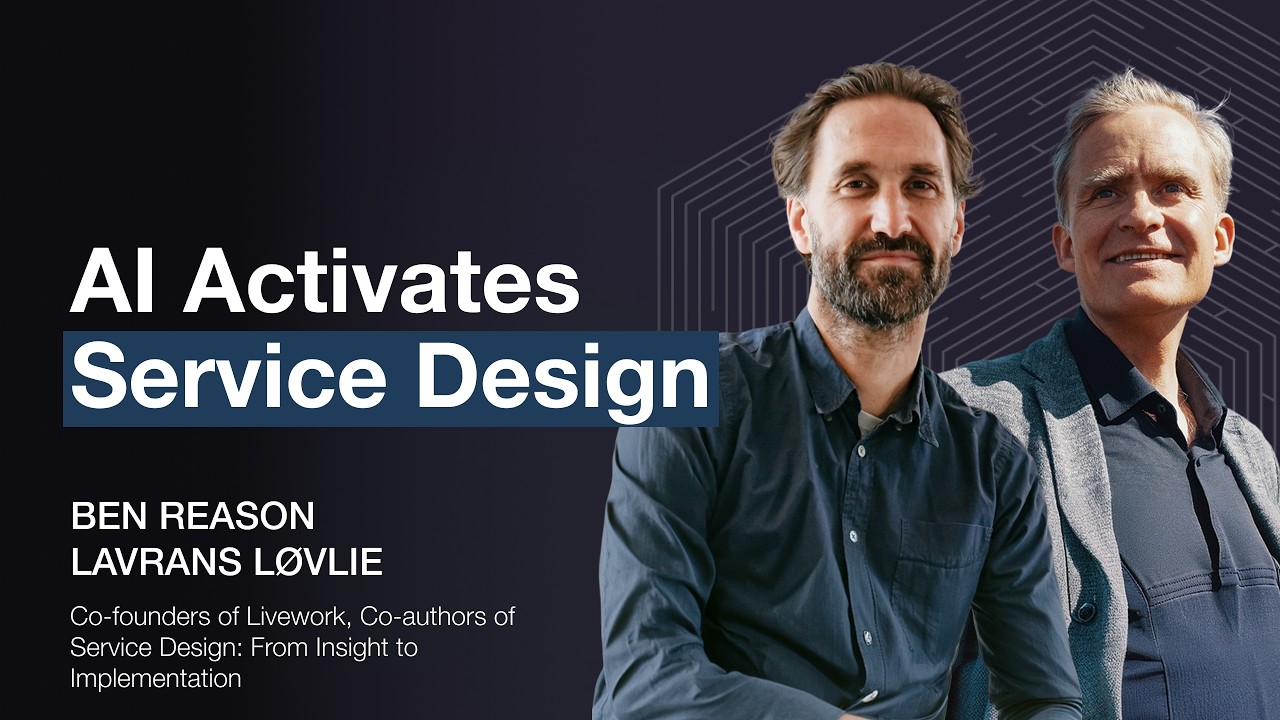
AI Activates Service Design
What do you hand the machine so it knows what the work is for? Ben Reason and Lavrans Løvlie on the service blueprint as a flight plan—a compression a human can sign, and a hydration an agent can run.
Originating episode · AI Activates Service Design · Invisible Machines · Ben Reason & Lavrans Løvlie · S7E19 · October 2026
To me, service blueprint is the flight plan.
—Robb Wilson
Episode
Free
Ben Reason & Lavrans Løvlie
AI Activates Service Design · Invisible Machines
UXM Article · From the Practice
Free · 8 min
Ben Reason
What Is a Service Blueprint in the Age of AI? Part 1
Service design is established, and AI is exposing the gaps. An evidence-based blueprint as a way for leaders to govern complex change.
Read article →
UXM Article · From the Practice
Free · 4 min
Ben Reason
What Is a Service Blueprint in the Age of AI? Part 2
The blueprint as a system prompt. Automation can free time, but people still have to decide what that time is for.
Read article →
Members essay
Members · 6 min
Josh Tyson
They Aren’t Paying for the Haircut
The haircut was the product. The service was the time in the chair, and the day after the hair left the building.
Read members essay →
UXM Article · From the Practice
Free · 14 min
UX Magazine Staff
Five More Obvious (But Not So Obvious) Truths About Service Design
Five more realizations from Reason, Løvlie, Godin, and Age of Invisible Machines. Each is trivially true—and each invalidates another category of work.
Read article →